
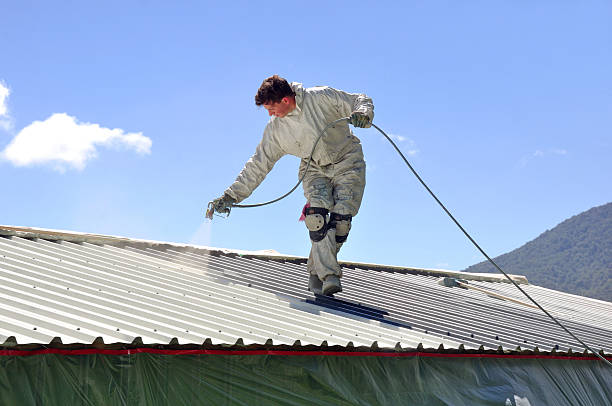
Why the High Desert Is So Hard on Roofs
Roof systems in Twin Falls, ID take on a harsher environment than many people expect. Relentless New Mexico sun dries out membranes year after year, while the summer monsoon cloudbursts locate every gap the sun exposed. This pattern is why residents in Twin Falls, ID often notice leaks sooner than expected.
Many leaks do not begin in the center of the roof. They usually develop at a canale, a scupper, a parapet cap, a skylight curb or a flashing detail, so finding the actual path of the water matters more than covering the stain on the ceiling. Ponding water that lingers for more than two days after a storm wears down the membrane beneath it, so good drainage is the heart of every reliable repair.
Flat Roof Systems Suited for the Southwest
Many of the properties in Twin Falls, ID rely on a flat or low-slope roof, from older tar and gravel and upgraded heat-welded TPO. Foam roofing with a silicone topcoat remains a popular choice because it is renewed rather than torn off, and modified bitumen gives a durable surface for busy roofs. Cool coatings can help lower roof temperatures that can reach toward 180 degrees on a hot afternoon.
Pitched roofs deserve just as much attention. Impact-rated asphalt shingles, clay and concrete tile, and standing seam metal each respond to sun and hail differently, and selecting the material to the property makes a big difference. Business managers in Twin Falls, ID can also benefit from semi-annual inspections that find minor problems before they become major failures.
Steps to Take When a Roof Leak Strikes
When water begins coming through the ceiling, move belongings away, catch the drip, and call a roofer immediately. Emergency tarping can limit additional damage tonight, then a permanent repair comes next as soon as the weather cooperates. Twin Falls, ID residents should avoid going up on a wet roof on their own.
A good roof walk starts with clear photos of every penetration, a level check for standing water, and a check in the attic or at the interior damage to confirm how the water moved. Afterward the contractor should deliver a written scope that explains patch and replacement options honestly. Where the city requires a re-roof permit, a reliable company files it and books the inspection for Twin Falls, ID properties.
Choosing a Roofer Who Stands Behind the Work
Hire a team that measures the roof itself instead of estimating from the footprint, because parapets, cooler platforms and multiple canales demand more material. Ask that job sites are swept daily, including a magnet sweep of walkways, and that you receive photos of the completed work prior to the invoice is settled. Be sure to check licensing and insurance before work begins, since timelines can change with the weather.
Our team at Loya Roofing supports the Twin Falls, ID region with locally rooted roofers that know how sun wear on different roofing material. If you live in Twin Falls, ID and require fast help, call (505) 636-9496 and explore https://loyaroofing.com to book an estimate. No matter if it is a recurring leak, storm damage or a aging flat roof, a dependable roofer in Twin Falls, ID can stop the problem and explain only the work that your roof actually needs.




Comments 0
You must be signed in to post comments or like this item.
Sign In to ParticipateNo comments yet
Be the first to share your thoughts!
Edit Comment